CASE STUDY:
LiUNA Headquarters – Washington, DC
Project Overview
A Conference Center Designed for Prominence
At the top of a landmark renovation, an entire floor had to function as both a refined headquarters amenity and a flexible event space — transparent, well-appointed, and built to last.
The Laborers’ International Union of North America (LiUNA) occupies one of Washington DC’s most prominent corners — one block from Lafayette Square and the White House. Having occupied the building since 1960, LiUNA spent two decades envisioning a complete transformation. When DAVIS Construction delivered it, the result was sweeping: a new nine-story building erected to the east, three new elevators, underground parking excavated adjacent to a WMATA tunnel, and the addition of a brand-new ninth floor — accessible through a steel and glass staircase spanning four floors.
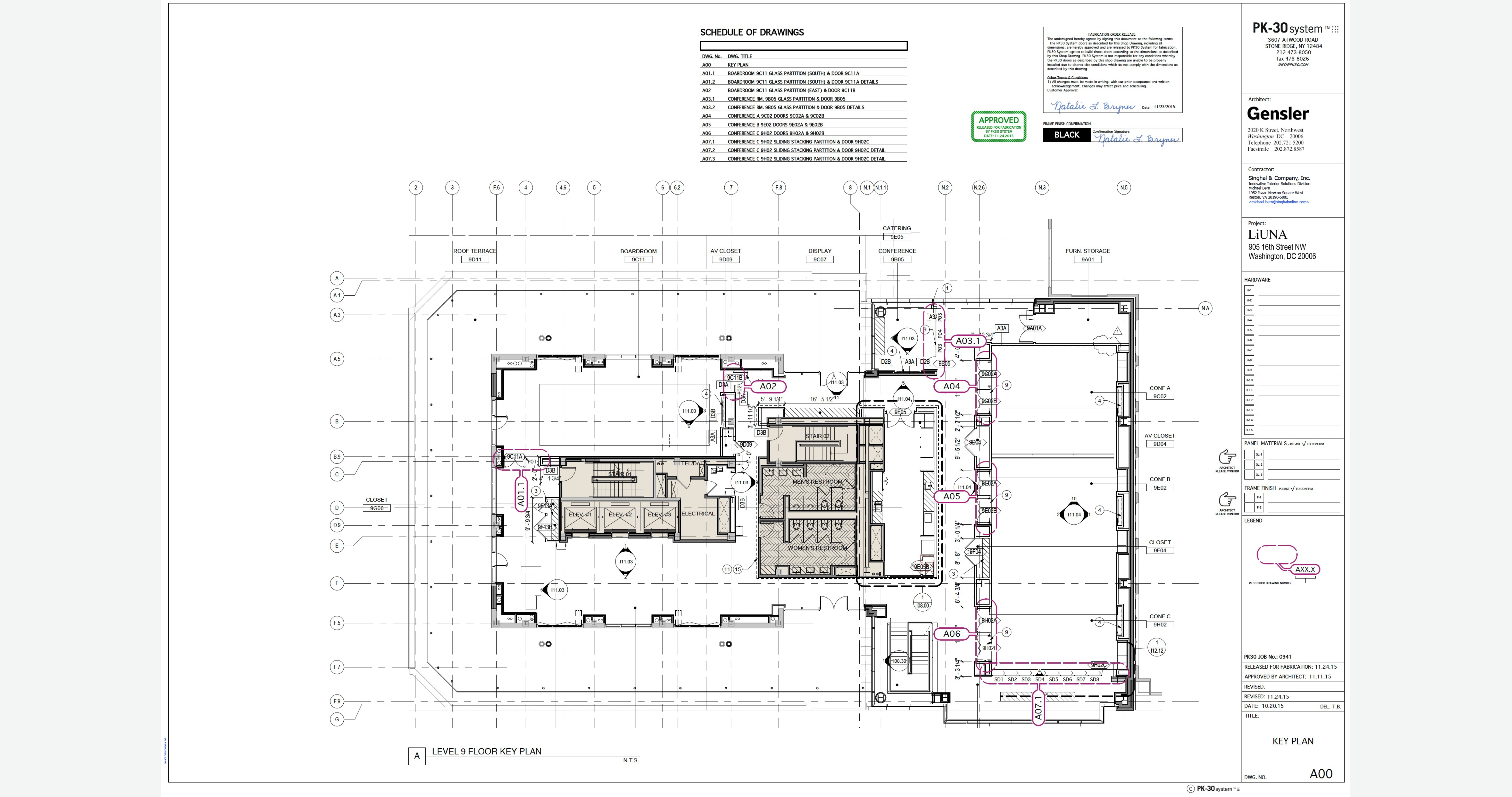
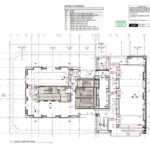
The entire ninth floor was built out as a conference center — an executive boardroom, three conference rooms, and an outdoor terrace with views of the White House and Washington Monument.
Designed by Gensler, Level 9 required interior systems capable of defining eight distinct private spaces while keeping the floor visually open. PK-30 was selected to deliver the complete glazing scope: full-height glass partitions, center-pivot swing door assemblies, and a large-format sliding/stacking operable wall.
Challenge
Full-Height Glass Without Visual Weight
Level 9 was designed to feel open. The glazing system had to divide without closing.
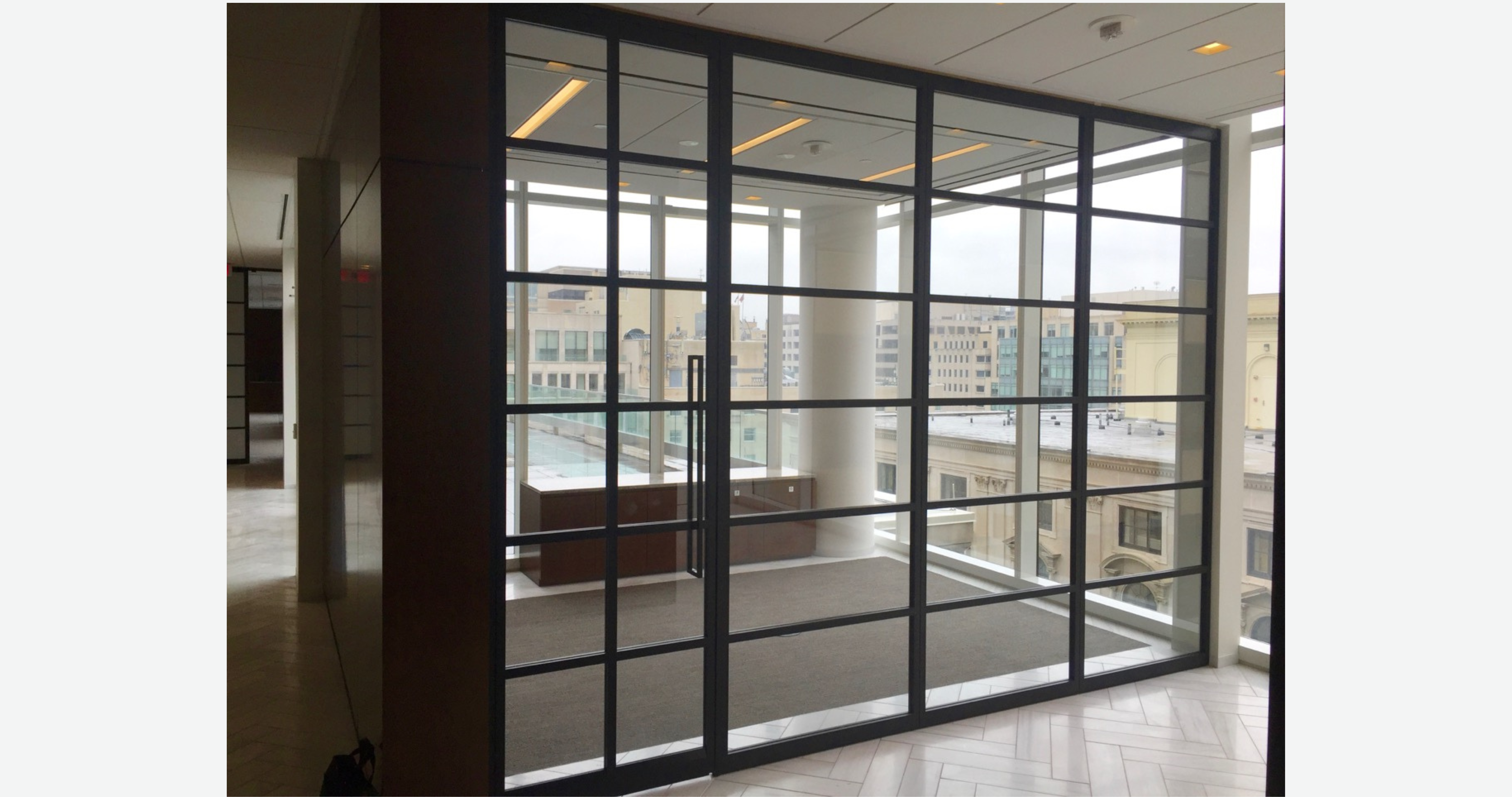
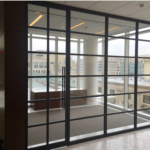
Gensler’s design called for full-height glass partitions rising 124 inches floor to finished header — nearly 10½ feet of continuous glass. At that scale, the framing system is a critical architectural element. Heavy profiles or visible sightlines would read as opaque walls, destroying the visual connectivity that makes the ninth floor worth occupying.
How do you build eight distinct private spaces on a single open floor — while preserving the view that justified building there in the first place?
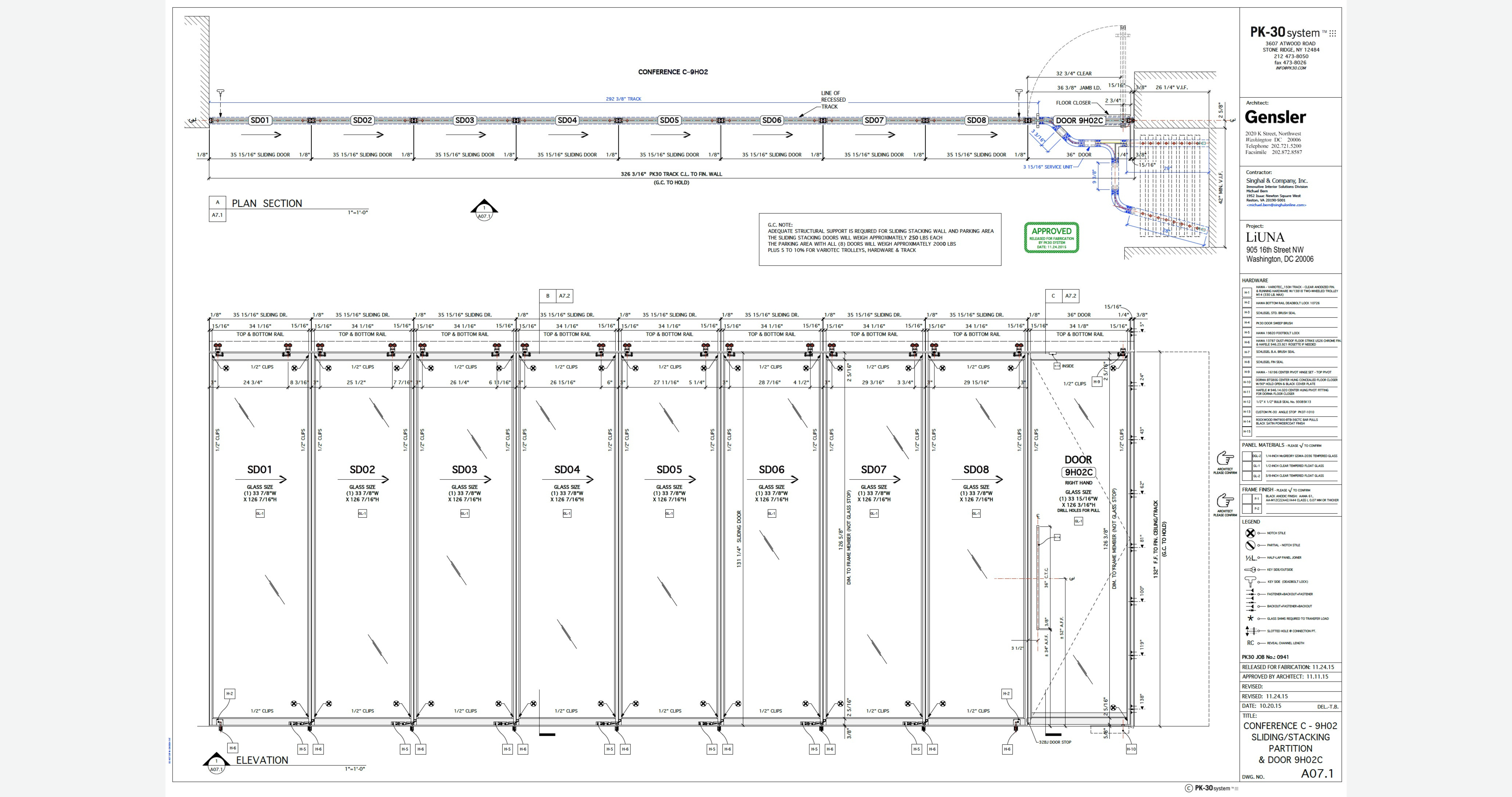
A further technical challenge was the Conference Room C operable wall. To allow the room to open fully into an adjacent space for events, the design required an 8-panel top-hung sliding/stacking system with a dedicated parking area — and no continuous floor guide channel to interrupt the floor plane. Each panel weighs approximately 250 lbs. With eight panels plus trolleys, hardware, and track, the full stacked assembly approaches 2,000 lbs of overhead load.
A third constraint: consistency. Across 10 separate assemblies spanning boardroom partitions, single-door sidelites, and double-door conference entries, the entire system had to read as one coherent installation — same slim 60mm profile, same black anodic finish, same glass grid language from door to door.
Solution
One System. Eight Spaces. Four Product Types.
A coordinated deployment of PK-30 full-height partitions, center-pivot swing doors, and a Variotec sliding/stacking operable wall — unified in a single black anodic profile across every assembly on the floor.
Boardroom & Conference Room 9B05
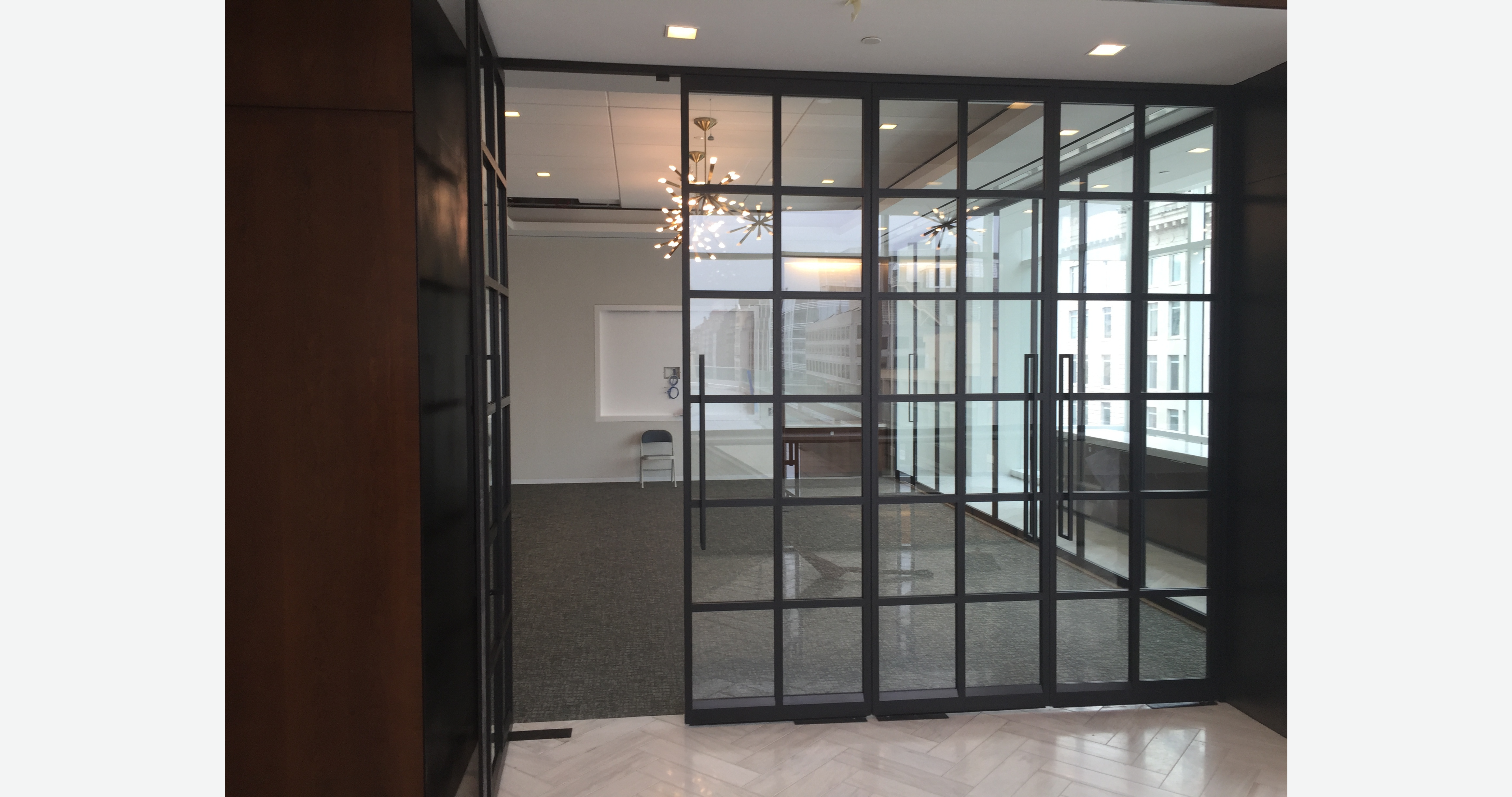
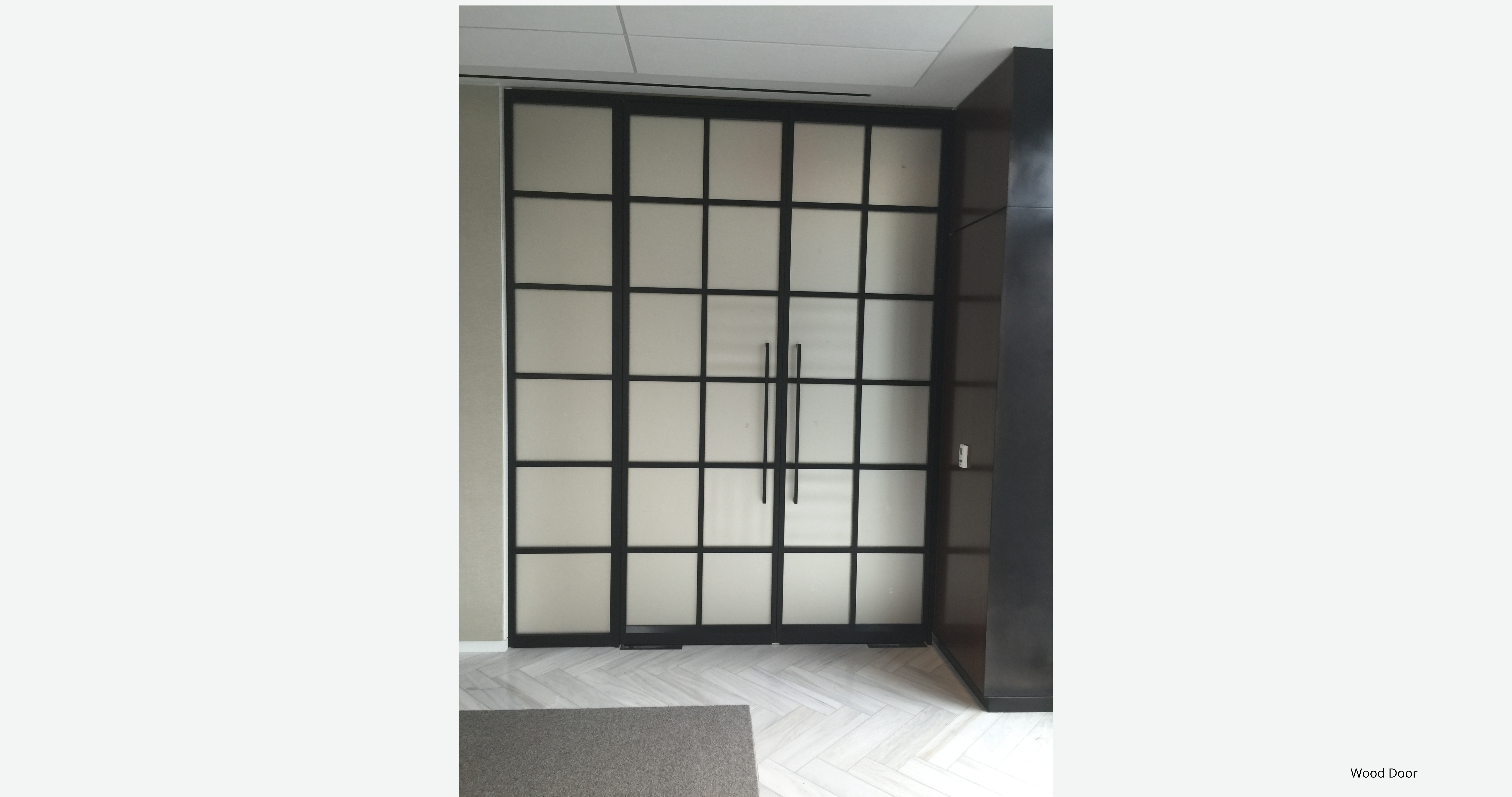
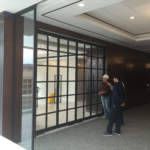
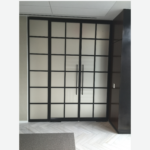
The Boardroom received two full-height partition assemblies. The south-facing partition — 99 inches wide — incorporates two active 36-inch center-pivot doors flanked by five fixed panels, separating the Boardroom from Reception. The east-facing partition is a single door with two fixed sidelites opening to a corridor. Both assemblies span the full 124-inch floor-to-header height, with DORMA BTS80G concealed floor closers and Rockwood bar pulls in black satin powdercoat.
Conference Room 9B05 received the largest fixed-panel assembly on the floor: a 165-inch-wide partition combining one active door with three 41-7/8-inch fixed panels. Steel reinforcement bars run the full height of the fixed panels. At this width, the assembly functions as a glazed architectural wall.
Conference Rooms A, B & C — Swing Door Assemblies

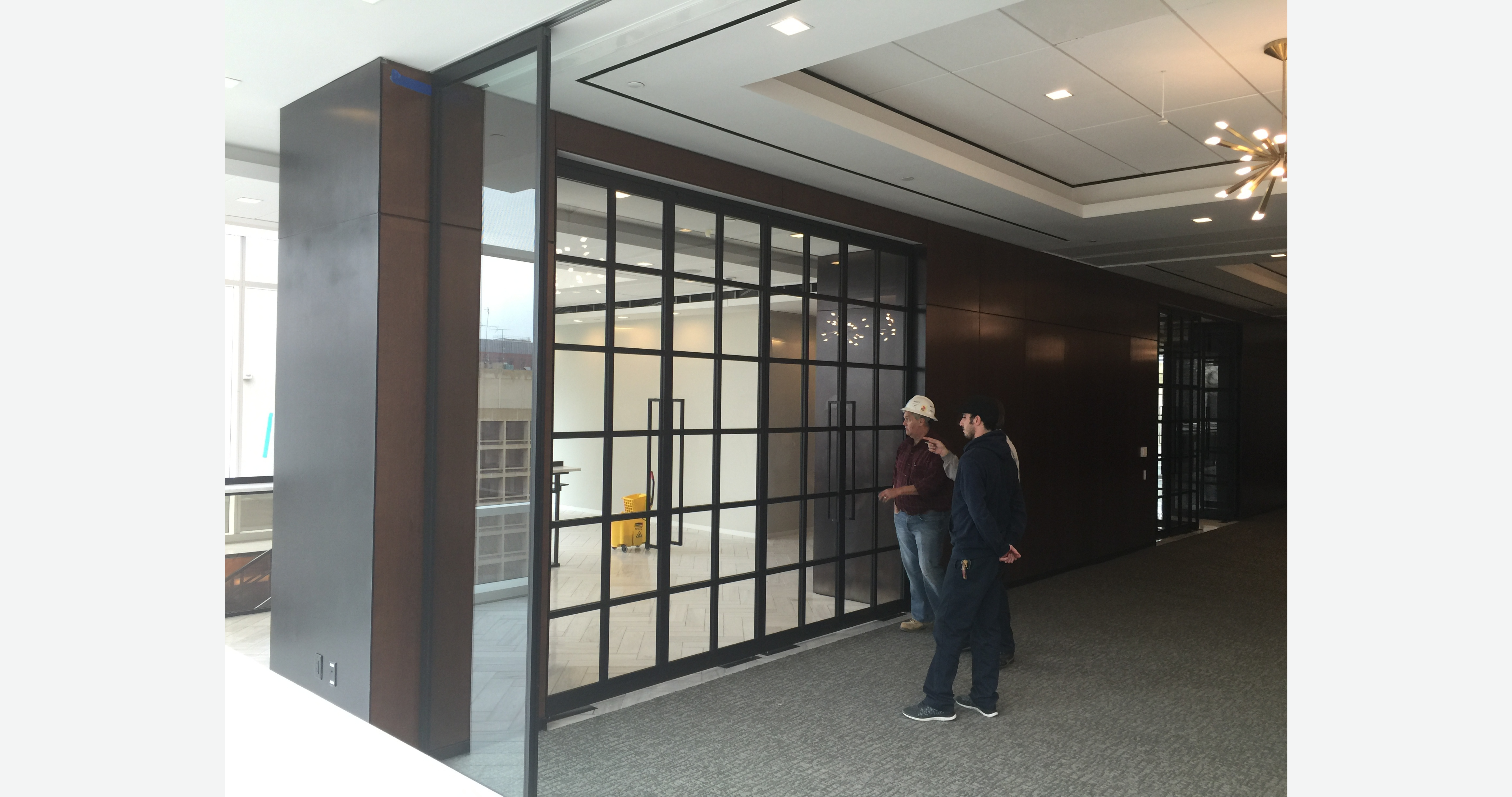
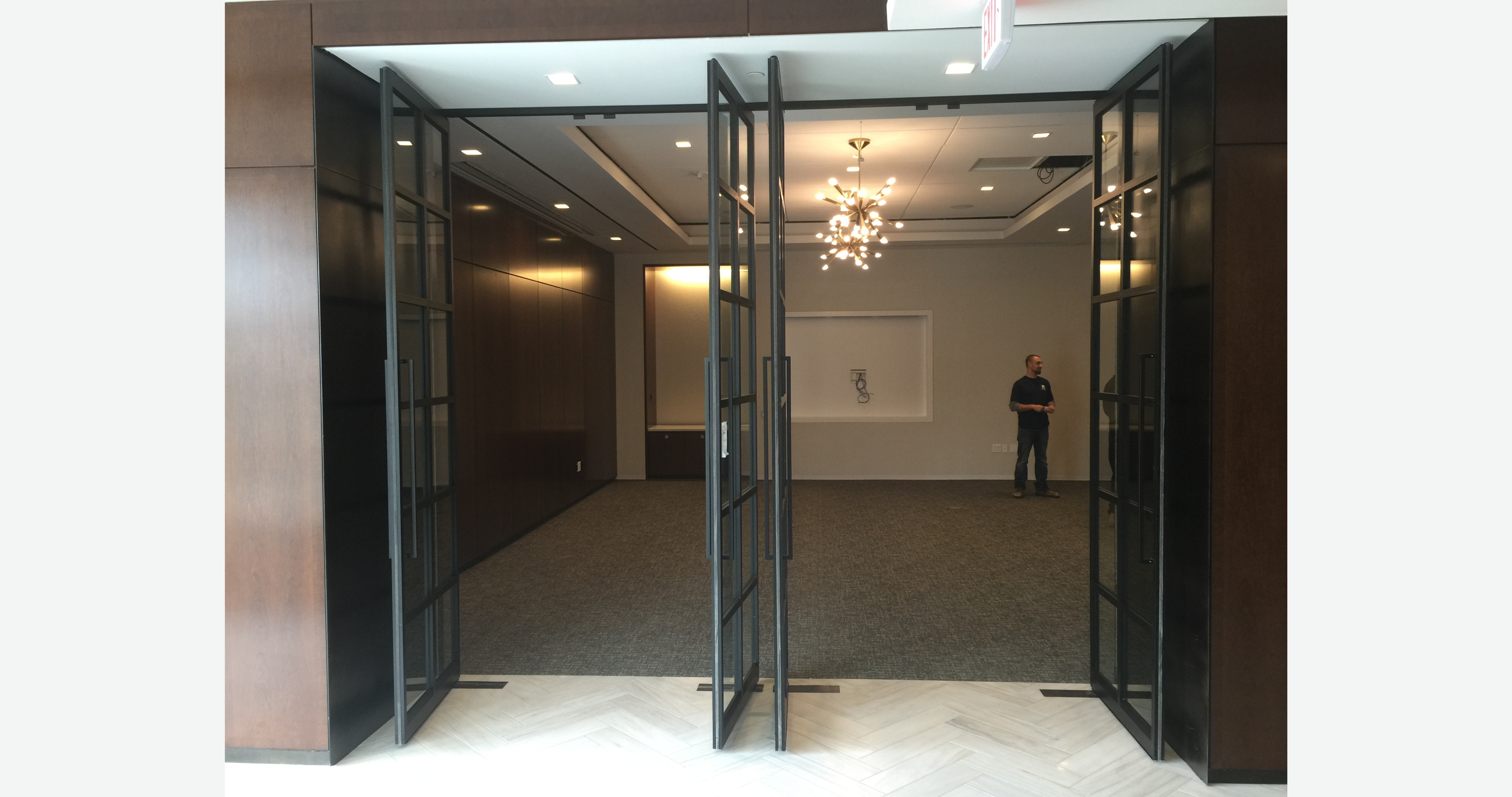
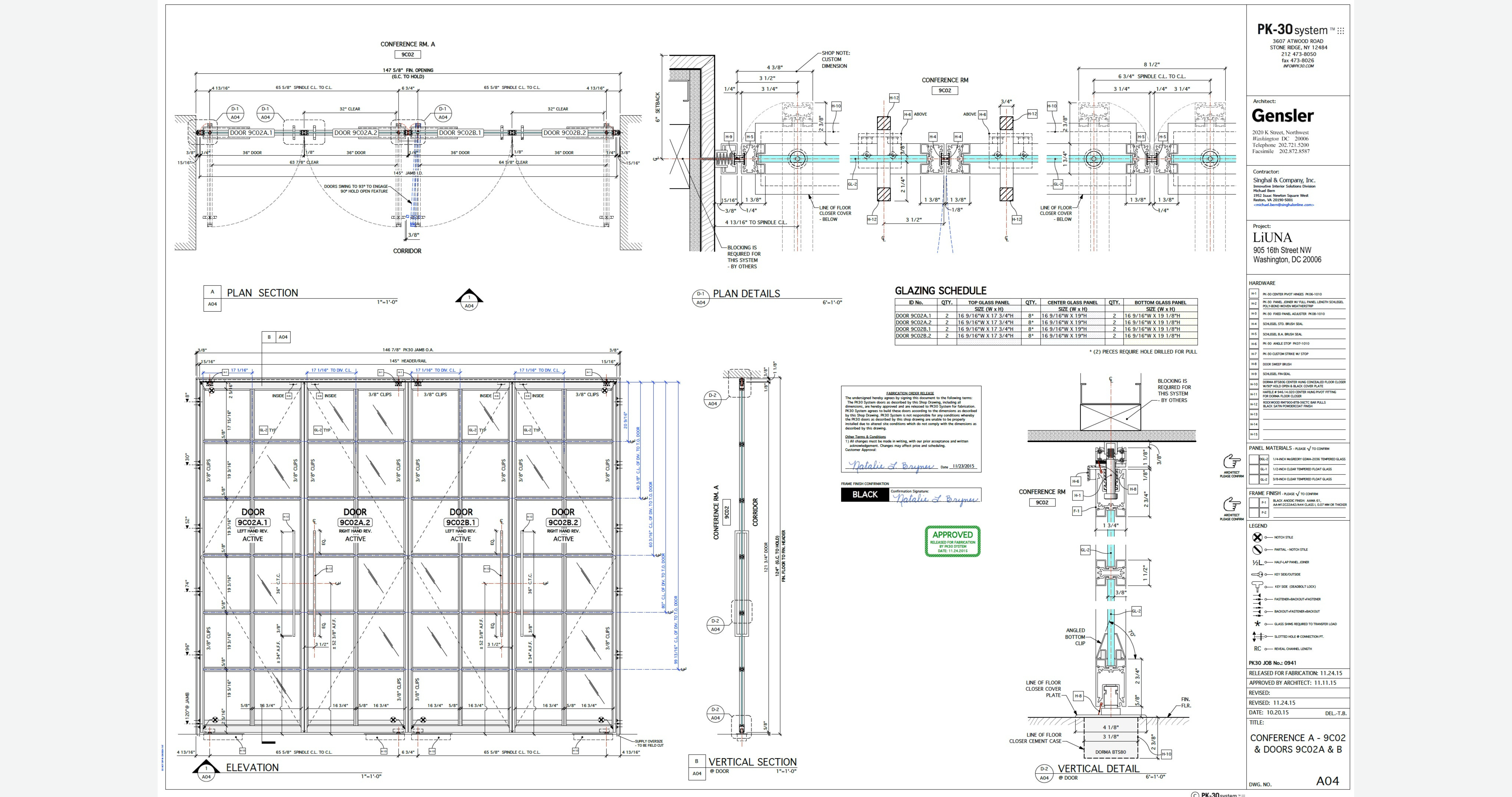
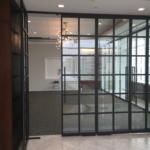
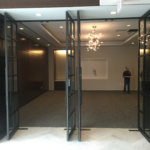
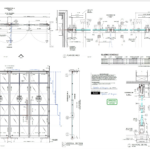
Each of the three conference rooms received matched double swing-door assemblies at both corridor-facing openings. Every assembly pairs two active 36-inch center-pivot doors in a 147-5/8-inch finished opening. Doors are engineered to swing to 93° to lock into 90° hold-open — maintaining clear circulation. Across all six assemblies, a consistent horizontal grid of glass lites (two top panels, eight center panels, two bottom panels per door) carries the same visual rhythm from one end of the floor to the other.
Conference C — Variotec Sliding/Stacking System
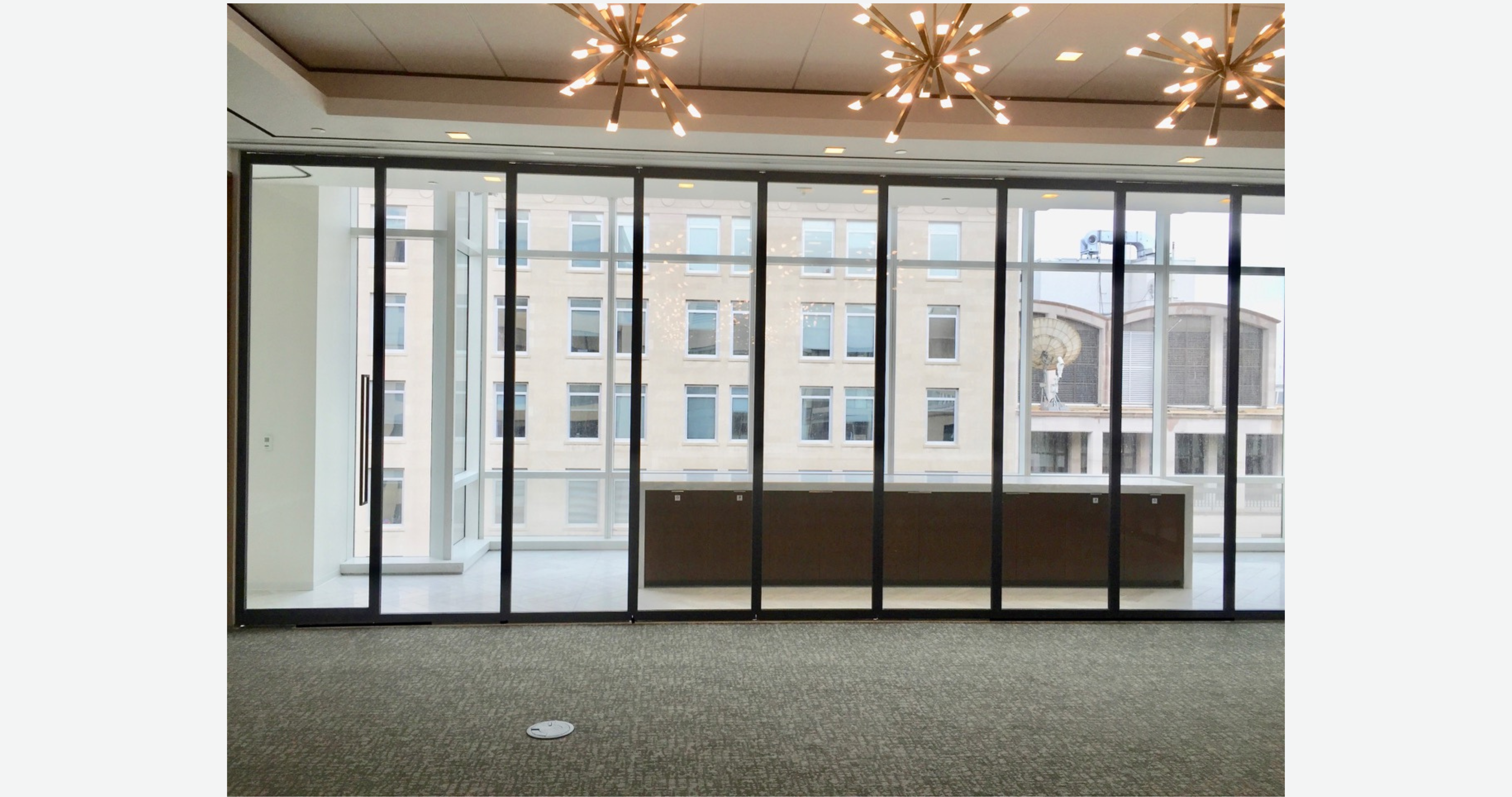
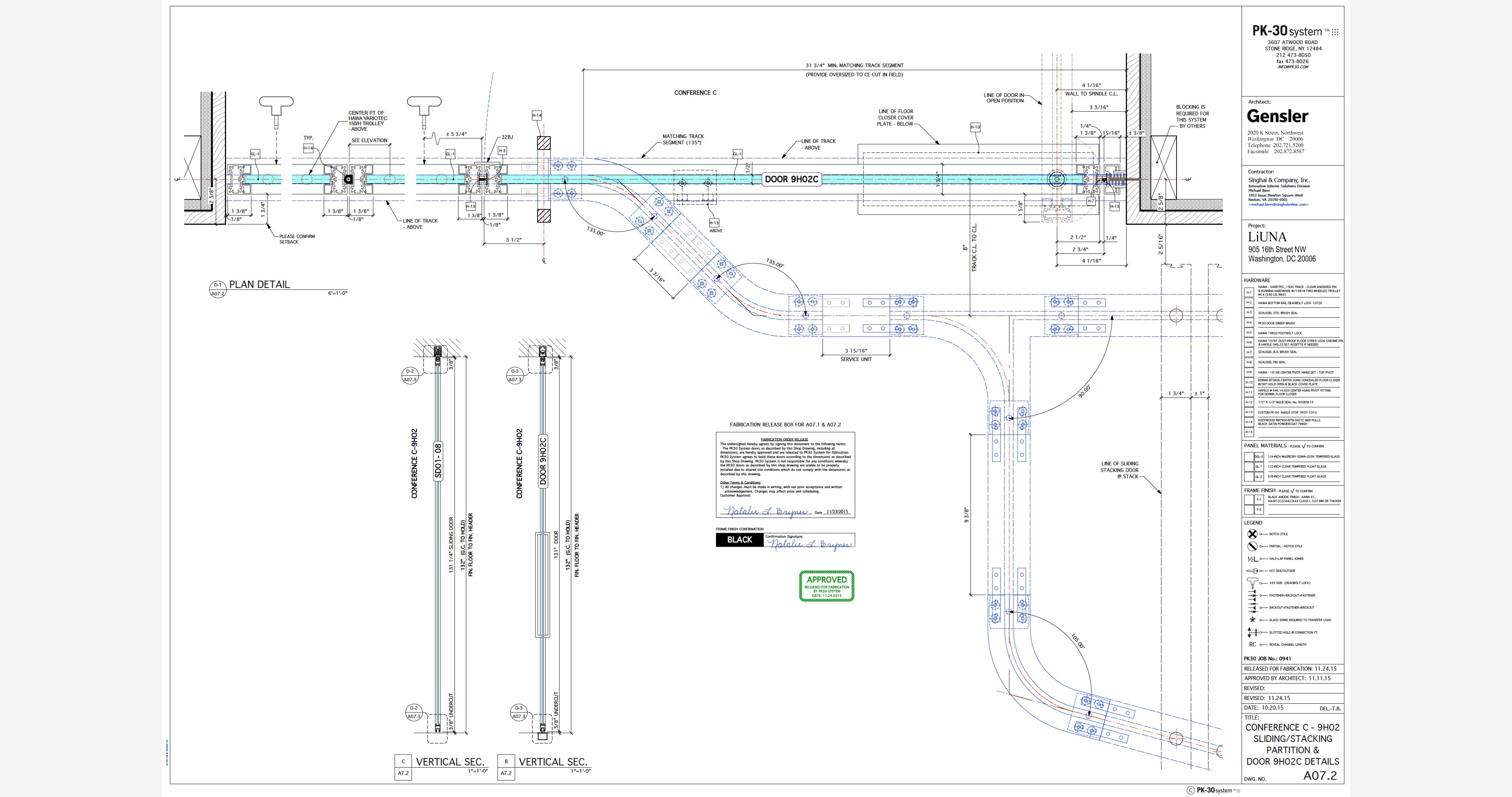
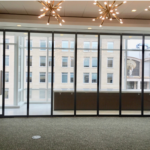
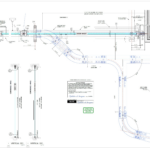
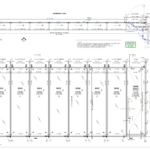
The most technically complex element of the Level 9 scope was the operable partition in Conference Room C. Eight full-height glass panels — each glazed in ½-inch clear tempered float glass — are top-hung from a HAWA Variotec 150H track recessed into the ceiling at 132 inches AFF. The continuous track runs 292-3/8 inches. Matched 135° track segments allow smooth panel transition into a perpendicular stacking pocket. HAWA deadbolt locks and dust-proof floor strikes secure each panel in closed position without a floor guide channel, preserving the seamless floor plane.
When closed, the eight panels and one active pivot door form a continuous 36-foot glass wall. When open, the entire wall disappears into its parking area — transforming the conference room into an open event floor.
Results
Eight Enclosed Spaces. One Transparent Floor.
The Level 9 conference center achieves precisely what Gensler designed it to do: a floor that operates as a prestigious gathering place without sacrificing the light and views that make it worth being in.
Where a conventional system would have imposed heavy framing or opaque panels, the PK-30 installation maintains the visual transparency that defines Level 9’s character. Daylight reaches across the floor. Views to the Washington Monument and the White House remain visible from inside the Boardroom. Privacy is defined entirely by glass and the slim 60mm aluminum profiles holding it.
The consistency of finish across all 10 assemblies gives the floor an architectural discipline — this reads as design, not as partition.
When the Conference C stacking wall is opened, Level 9 functions as a single event space. When closed, it resolves into a suite of enclosed rooms. That flexibility is structural — it is engineered into the building, not achieved with furniture.
Conclusion – The PK-30 Experience
Glass Walls Built for a Building That Had to Stand Out
The LiUNA Level 9 installation demonstrates PK-30’s capacity to deliver a complete interior glazing scope at institutional scale.
By coordinating full-height fixed partitions, multi-panel swing door assemblies, and a large-format sliding/stacking operable wall within a single unified system and finish specification, PK-30 delivers both architectural presence and operational flexibility to one of Washington DC’s most prominent headquarters buildings.
Three technical demands defined this project: height, consistency, and load. PK-30 answered all three — 124-inch partitions in slim profiles, a black anodic finish maintained across 10 assemblies, and a top-hung stacking system engineered to carry nearly 2,000 lbs without touching the floor.
For organizations that require their interiors to perform at the level of their architecture, PK-30 delivers a system designed to define space — not simply divide it.
Location
Washington, DC
Architect
Gensler — 2020 K Street NW, Washington DC
General Contractor
DAVIS Construction
PK-30 Scope of Work
14 active center-pivot doors · 10 fixed glass panels · 8-panel sliding/stacking partition with active door